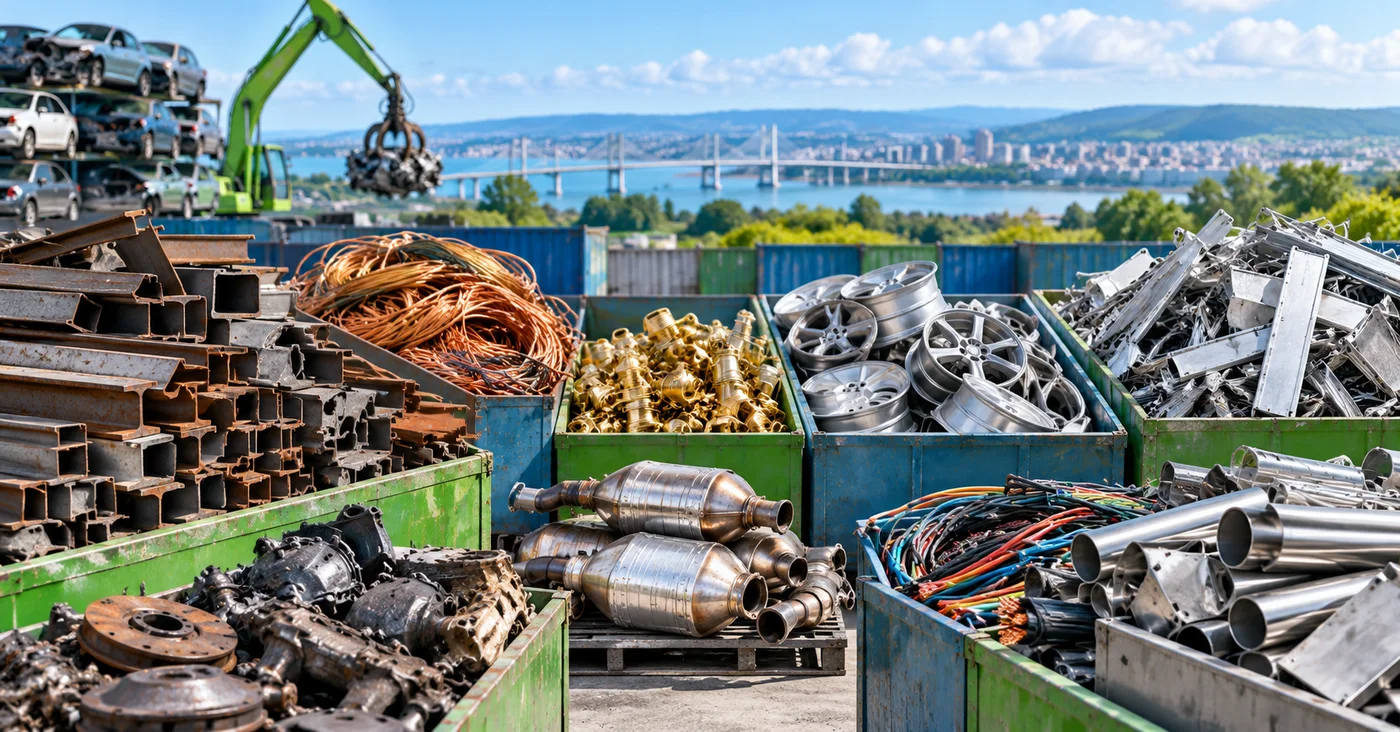
Understanding the materialWhy separating scrap can make assessment easier
A pile of metal may look like one load, but the contents can have very different recycling routes and values. Clean copper, for example, is not assessed in the same way as steel. Brass, aluminium, stainless steel and insulated cable also have different grades. Where possible, keeping obviously different metals separate helps us understand what you have and can reduce unnecessary sorting later.
You do not need specialist equipment to make an enquiry. If you know the material, tell us. If you are unsure, send photographs showing the items clearly and give us some context about where they came from. A magnet can sometimes help distinguish common ferrous material from non-ferrous metal, but it is not a complete identification method and you should never dismantle unsafe equipment just to determine a grade.
Catalytic converters and vehicle-related metal
The previous website specifically mentioned catalytic converters, and genuine converter enquiries may still be considered where acceptance is confirmed and the seller can provide appropriate information about ownership or provenance. Because catalytic converters are a theft-sensitive vehicle component, identification and record-keeping are especially important. Do not remove or transport a converter simply because you assume it will be accepted; contact us first with the vehicle or item details.
The same principle applies to vehicle metal. Alloy wheels, metal panels, exhaust sections and mechanical assemblies can contain recoverable metals that need to be assessed and handled through the appropriate recycling route.
Large, awkward or mixed items
Heavy steel, machinery, bulky frames and mixed loads need a little more planning than a box of copper offcuts. Tell us the approximate size, quantity and collection location. Access can make a big difference: a load beside a wide commercial yard is very different from something at the back of a narrow residential property. Photographs showing both the material and the surrounding access are useful when an item is unusually large or heavy.
Please ask before bringing material to site. Acceptance can depend on the type of metal, its condition, quantity and current operational requirements. Sending details first avoids wasted journeys and gives the team a chance to tell you what information or identification may be needed.
Scrap metal payments are cashless
One important difference between older scrap-yard advertising and today’s process is payment. Scrap metal dealers in England and Wales are not permitted to buy scrap metal for cash. Where payment is due for accepted scrap metal, it must be made using an approved traceable method such as electronic transfer or a non-transferable cheque. This is part of the wider rules designed to improve traceability in the metal recycling industry.
Scrap metal dealers also have obligations around verifying the identity and address of people supplying scrap and keeping transaction records. That means you may be asked for appropriate identification and information about the material. These checks are a normal part of a responsible transaction rather than an unnecessary complication.
What we generally cannot treat as a simple scrap-metal enquiry
Not every item that contains metal is automatically suitable. Sealed cylinders, hazardous containers, batteries, electrical equipment containing controlled materials, pressurised items and anything of uncertain or suspicious origin may need a different waste route or additional checks. Never cut open, burn, drain or dismantle something hazardous just to recover the metal inside it. If you are unsure, describe the item first and wait for guidance.
Serving Cardiff and the wider South Wales area
Our core service area is centred on Cardiff with collections and enquiries extending into Newport, the Vale of Glamorgan, Caerphilly, the Valleys and other areas of South Wales. Whether you are a homeowner with a small quantity of metal or a trade customer with a larger load, the easiest way to start is with an honest description, a rough quantity and your postcode.
For a scrap vehicle, use the dedicated vehicle quotation form because it asks the questions needed for recovery and vehicle paperwork. For loose scrap metal, workshop metal or mixed material, contact the team on 07870 558110 or use the contact page. We can then confirm whether the material is suitable and explain the practical next step.