
Get a quote for your vehicle
Start with the registration and location, then tell us enough about the condition to make the first quote conversation genuinely useful.
A registration number is only the starting point
Make and model are important, but two cars with the same registration year can be in completely different condition. One may still drive with months left on the MOT; another may have no keys, a seized wheel and major accident damage. Collection and value can change significantly depending on those details.
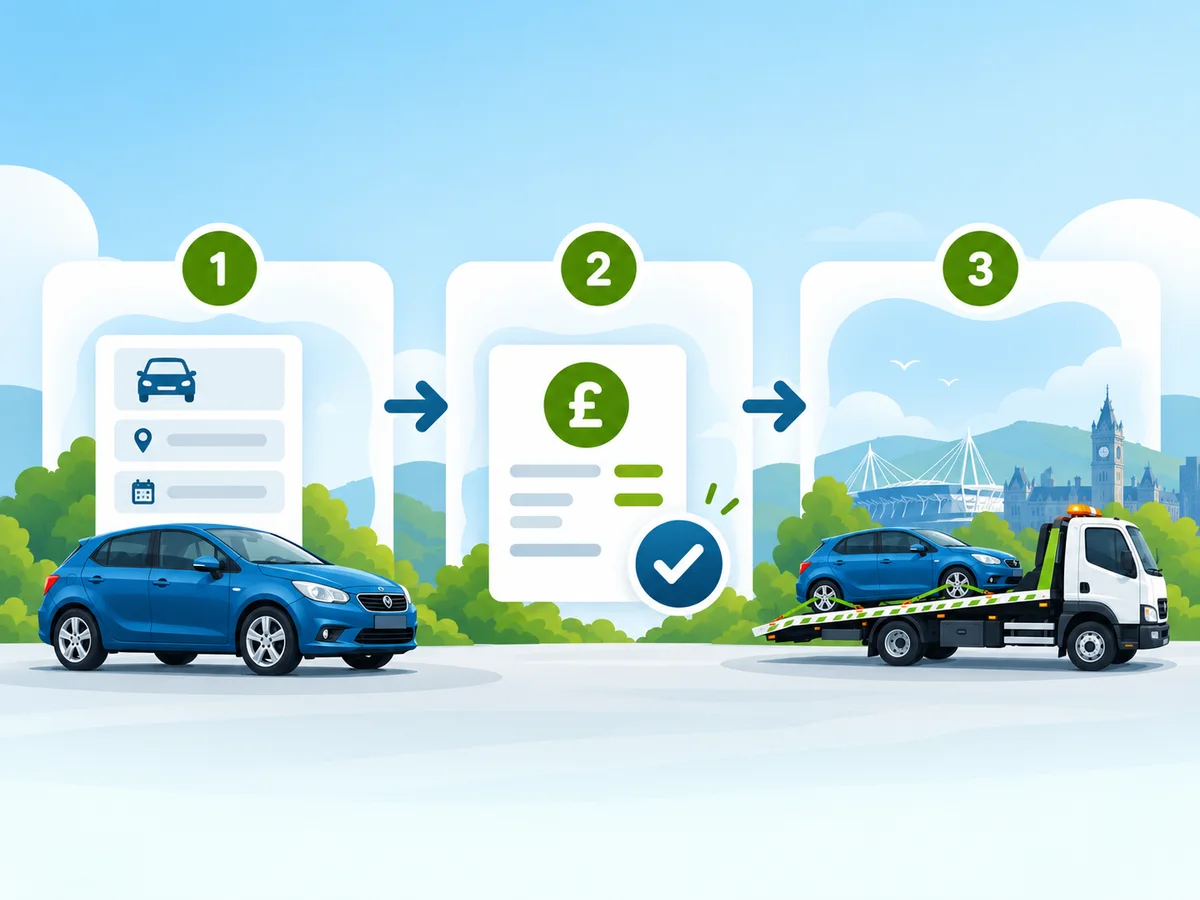
The form is split into three short steps so you can give us the useful information without facing one huge page of boxes. If you do not know an optional answer, leave it blank or explain what you do know.
What affects a scrap or salvage vehicle quote?
Vehicle weight and current material values are part of the picture, but they are not the whole picture. Make, model, age and condition can all matter, as can whether components are reusable, whether the vehicle is complete and how difficult it is to recover. A car with four rolling wheels on an accessible driveway is a different collection job from a vehicle with no keys in a basement car park.
That is why the condition step asks whether the vehicle starts and moves, the MOT position, any write-off category you know about, whether the wheels roll, and whether you have the V5C. You can also describe mechanical faults, body damage or missing parts in your own words. Photographs are optional but can be very helpful for accident damage or unusual access situations.
Can I get a quote if the car does not run?
Yes. Non-runners are one of the main reasons people contact a scrap vehicle buyer. Engines fail, clutches go, batteries and electrical systems develop faults, and cars sometimes sit unused until they no longer start. Select the option that best describes the vehicle and use the notes box to explain anything that could affect loading or recovery.
What if the car has failed its MOT?
An MOT failure does not automatically mean a car must be scrapped. Some failures are inexpensive to repair. Others involve corrosion, brakes, suspension, emissions, structural issues or multiple faults that make the total repair cost hard to justify. If you have the failure sheet, you can summarise the main items or upload a photograph if that helps explain why you are considering disposal.
Do I need the V5C logbook?
Having the V5C makes the handover and notification process simpler, but if you cannot find it, say so in the form rather than abandoning the enquiry. Ownership and identity still need to be established correctly before a vehicle is taken. If you proceed, the team can explain which details will be required for the specific transaction.
How is payment made?
If the vehicle is being purchased as scrap in England or Wales, the law does not allow cash payment. Payment must be made by electronic transfer or non-transferable cheque. The payment method and timing should be clear before the vehicle is handed over. This is an important distinction because older scrap-car advertising sometimes still uses the phrase “cash for cars” even when the legal transaction must be cashless.
What happens after I send the form?
Your enquiry is stored so the team can review it and contact you using the details you provide. At this test-site stage, the website is ready for SMTP to be added once you provide the email server details. Until then, submissions are also safely written to the site’s protected enquiry storage so they can be checked through the admin area. When SMTP is switched on, the same enquiries can be emailed to the chosen sales address automatically.
Submitting the form does not commit you to a sale. It gives us the information needed to discuss the vehicle sensibly. If you accept the quote, collection arrangements, identification, payment and paperwork can then be confirmed before the vehicle is moved.